
Moving Magnet or Moving Coil: The Cartridge Choice That Shapes the Best Turntables in Australia
A turntable’s cartridge is a small component with an outsized role. It follows the record groove and turns its tiny movements into the signal your system amplifies. That makes it an invisible foundation of vinyl playback: easy to overlook, yet central to the character and quality of what you hear.
If you’re searching for the best turntables Australia has to offer, it’s worth looking beyond the deck itself. The cartridge needs to suit the tonearm, phono input and the way you listen. Two common designs, moving magnet (MM) and moving coil (MC), offer different approaches, each with practical advantages.
Neither is automatically better. The right choice is the one that fits your system and brings you closer to the sound you enjoy.
What does a turntable cartridge do?
A stylus rests in the record groove, tracing its shape as the record spins. The stylus is attached to a cantilever, which moves a small generator inside the cartridge. That generator converts the movement into an electrical signal for your phono stage and amplifier.
It’s a delicate process. The cartridge must respond to minute changes in the groove while remaining stable and accurately aligned. When it’s well matched to the rest of your system, you can settle into a record and hear music unfold with clarity, texture and presence.
MM and MC cartridges achieve this conversion differently. The key distinction is which part of the generator moves.
Moving magnet: versatile and easy to live with
In a moving-magnet cartridge, a small magnet attached to the cantilever moves near fixed coils. MM cartridges are widely used and can be a straightforward choice for many systems.
Their practical appeal often comes down to compatibility and ongoing care:
- A common phono connection: Many MM cartridges are designed for a standard MM phono input. Always check the cartridge and phono-stage specifications before connecting.
- Convenient stylus replacement: With many MM designs, you can replace the stylus assembly without replacing the entire cartridge body.
- A flexible starting point: MM can suit listeners who want to enjoy vinyl without adding specialist MC-compatible equipment to their system.
A replaceable stylus can also make routine ownership simpler. When the stylus is worn, or if you want to explore a different stylus profile, you may be able to change the assembly while keeping the cartridge body in place. The options vary by model, so it’s sensible to check the manufacturer’s guidance.
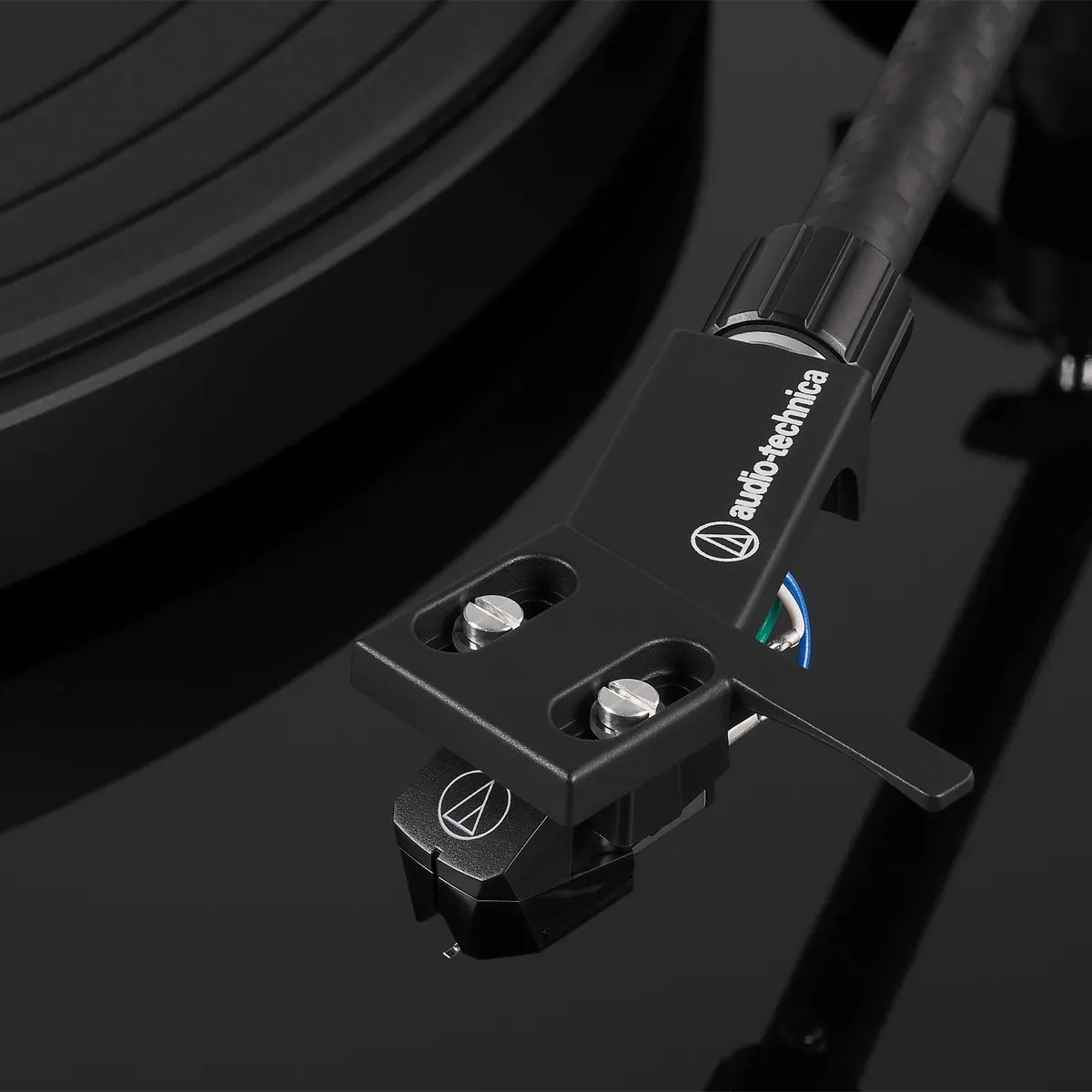
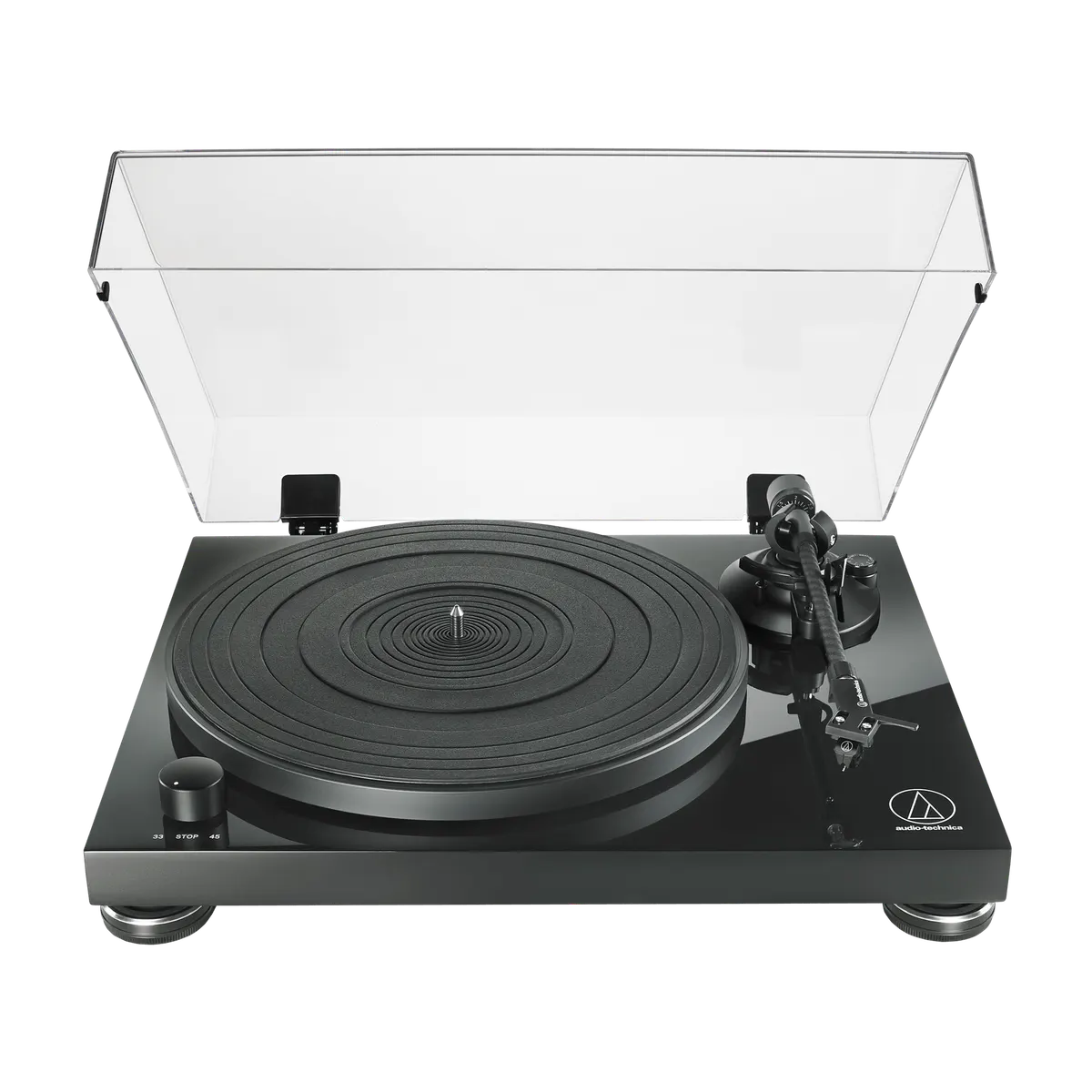
As one example, the Audio-Technica AT-LPW50PB comes fitted with an AT-VM95E dual moving-magnet cartridge. It’s a useful illustration of how a turntable and cartridge are considered together, not as unrelated boxes.
Moving coil: a different design, with more to consider
In a moving-coil cartridge, tiny coils attached to the cantilever move within a magnetic field. The design can use a low-mass moving assembly, which may support precise tracking and the retrieval of subtle musical detail.
That potential comes with a little more to think about. Many low-output MC cartridges produce a weaker signal than a typical MM cartridge. They need a phono stage with the appropriate MC setting, or another suitable way of providing the required gain. Check the cartridge’s specifications and your phono stage’s compatibility before choosing.
MC cartridges also commonly require specialist attention when the stylus is worn. Depending on the model, repair or retipping may be available, but it is not usually the same simple owner-replaceable process found on many MM designs.
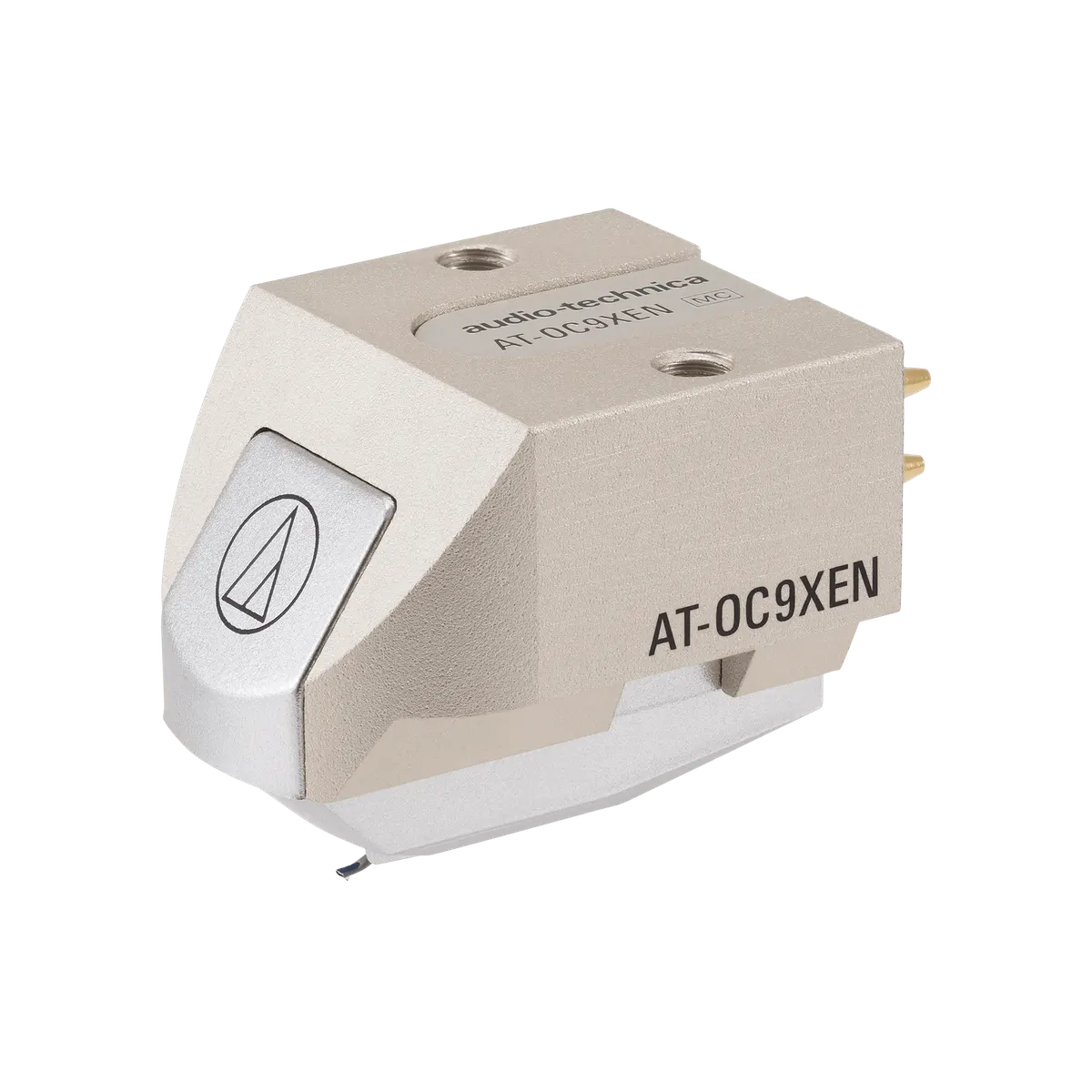
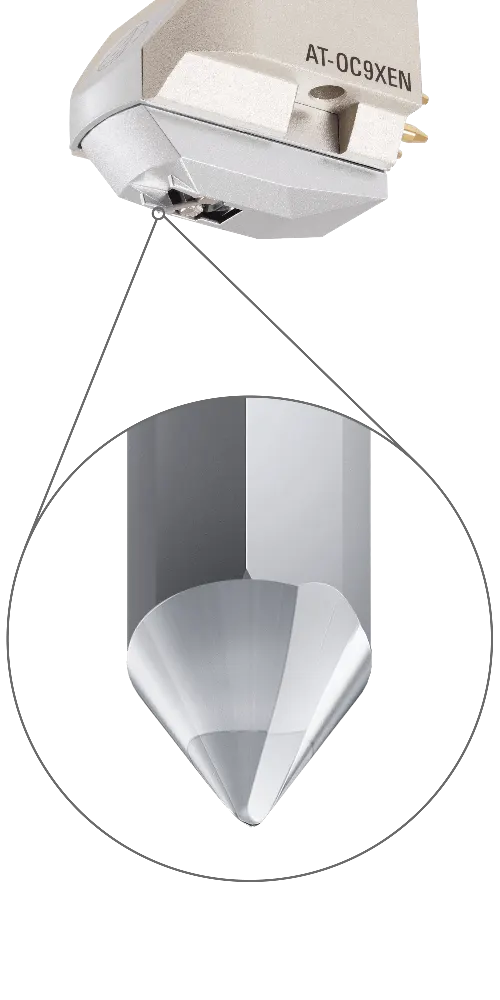
The Audio-Technica AT-OC9XEN is one example of a moving-coil design. Its product information describes a dual moving-coil construction and a low-mass nude elliptical stylus. Those details tell you about its design; they don’t, on their own, determine whether it’s the right match for your turntable and system.
MM or MC: the differences that matter in daily listening
The choice isn’t simply “easy” versus “advanced”, or “good” versus “better”. A well-matched MM can be more satisfying than an MC paired with an unsuitable phono input. Consider the practical differences:
| Consideration | Moving magnet (MM) | Moving coil (MC) |
|---|---|---|
| Moving part | Magnet attached to the cantilever | Coils attached to the cantilever |
| Phono compatibility | Commonly uses an MM input | Low-output models usually need MC-compatible gain |
| Stylus care | Many models have a replaceable stylus assembly | Often requires service or specialist attention |
| System matching | Check phono input and tonearm compatibility | Check gain, loading and tonearm compatibility carefully |
These are general tendencies, not rules for every model. High-output MC cartridges exist, for example, so the cartridge type alone won’t tell you which input to use. Always follow the manufacturer’s recommendations.
For a deeper technical explanation of the two designs, see Audio-Technica’s guide to moving-magnet and moving-coil cartridges.
Don’t overlook the phono input and tonearm
A cartridge doesn’t work in isolation. Its output and electrical requirements need to suit the phono stage. The circuit that prepares the cartridge’s signal for the rest of your system. An incompatible input can mean the signal is too quiet or that the system doesn’t operate as intended.
The tonearm matters, too. Cartridge and arm characteristics interact, so a cartridge that works beautifully in one combination may not be the best choice for another. That’s why checking compatibility before upgrading can save you time and help protect your investment.
You don’t need to calculate every technical detail alone. The useful first steps are to identify your turntable and tonearm, check the cartridge’s recommended specifications, and confirm what phono inputs your amplifier or phono stage supports.
How to choose a turntable cartridge for your listening
Before choosing MM or MC, ask yourself:
- What does your current system support? Check your amplifier or phono stage for MM and MC compatibility, and confirm the cartridge’s output requirements.
- How do you want to manage future stylus care? If straightforward stylus replacement is a priority, an MM model with a replaceable assembly may be appealing.
- Is the cartridge compatible with your tonearm? Check the turntable manufacturer’s guidance, or ask a specialist to assess the match.
- What do you hear when you listen? Technical design offers useful clues, but it cannot tell you which presentation you’ll prefer across your own records and system.
A cartridge upgrade can be a sound investment, but only when it suits the whole setup. There’s little value in selecting an MC cartridge for its potential detail if your system cannot provide the required gain, or in choosing a replacement without checking whether it fits the tonearm.
Choose for the whole experience
Moving magnet and moving coil cartridges each have a place in a thoughtful vinyl system. MM often makes day-to-day ownership simple, while MC gives you another path to explore when your system can support it. Neither design guarantees a particular sound or listening experience. Matching and careful selection matter.
At Toma Audio, we help music lovers across Tweed Heads, the Gold Coast, South-East Queensland and the Northern Rivers find equipment that suits their rooms, systems and records. If you’re considering a cartridge change, you’re welcome to get in touch and talk it through with us.
Bring your questions, and, if you like, a favourite record. We’d be pleased to help you compare suitable options and audition cartridges in our showroom, without pressure to buy.